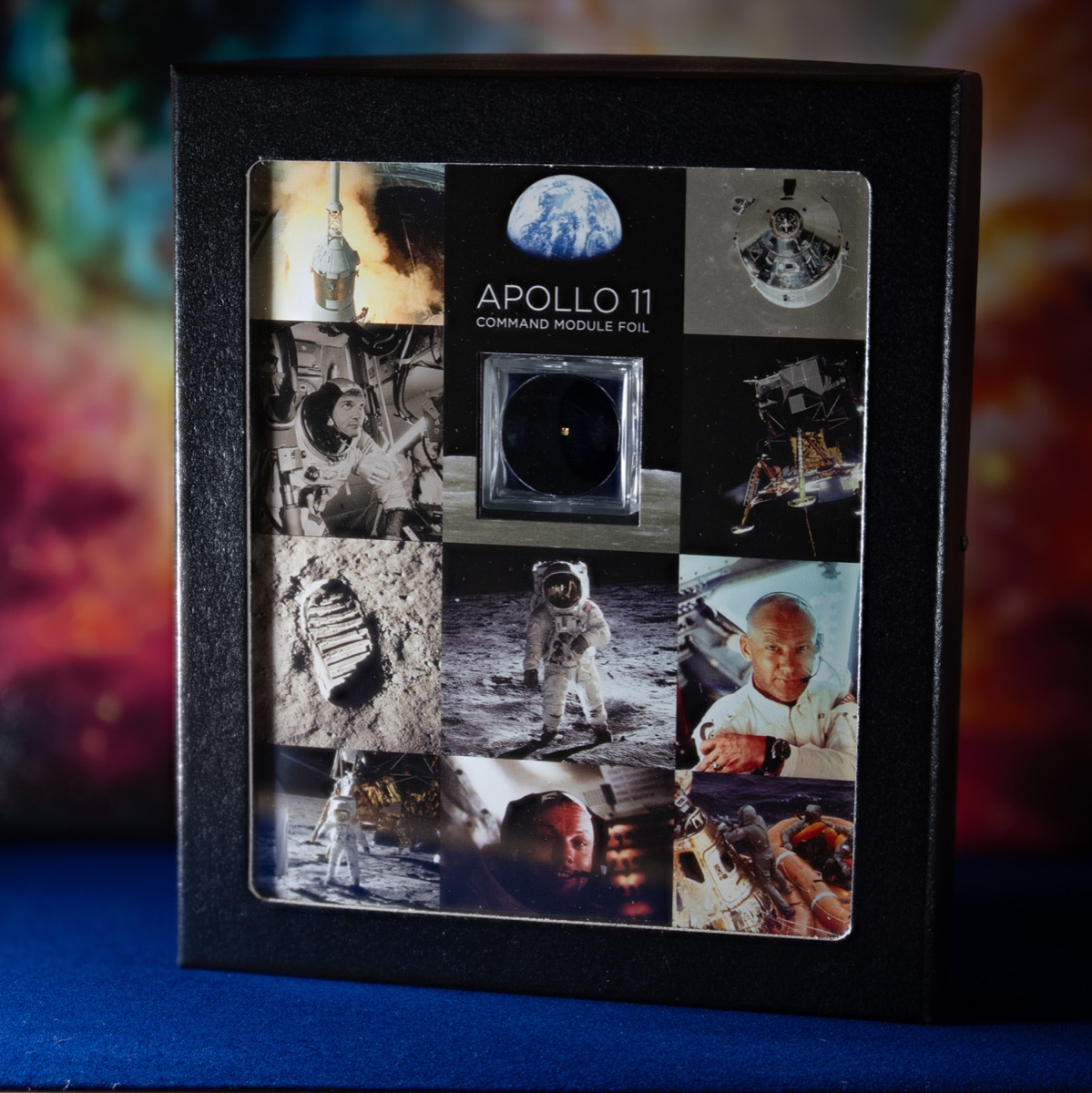
Apollo 11 Command Module Foil
Mission-flown Kapton foil from the Columbia command module
Secure checkout powered by Shopify
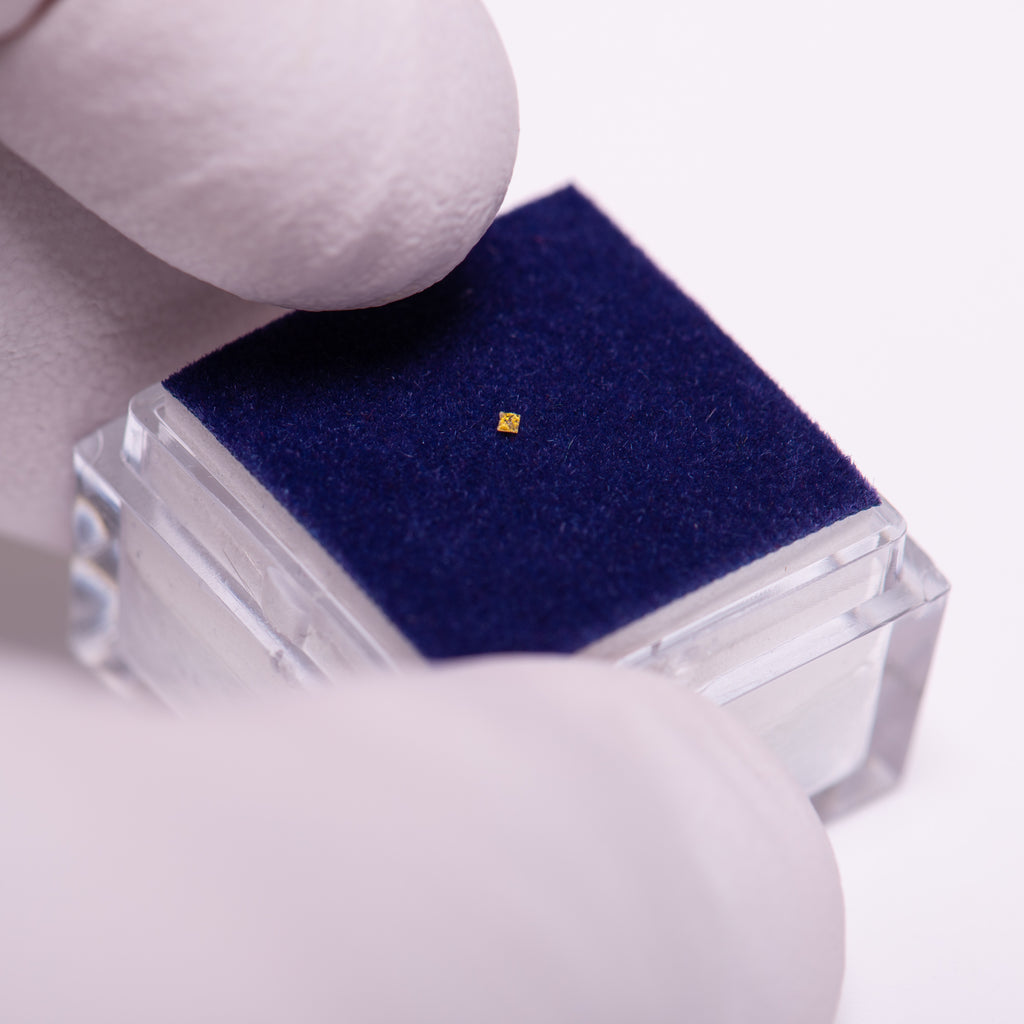
A Piece of Apollo 11
This specimen is an actual, mission-flown fragment of kapton foil from the Apollo 11 Command Module Columbia. This material helped protect Apollo astronauts Neil Armstrong, Buzz Aldrin, and Michael Collins on their journey from Earth to the Moon and back. Salvaged after splashdown, this is a unique collectible from one of the greatest achievements in human history.
Provenance
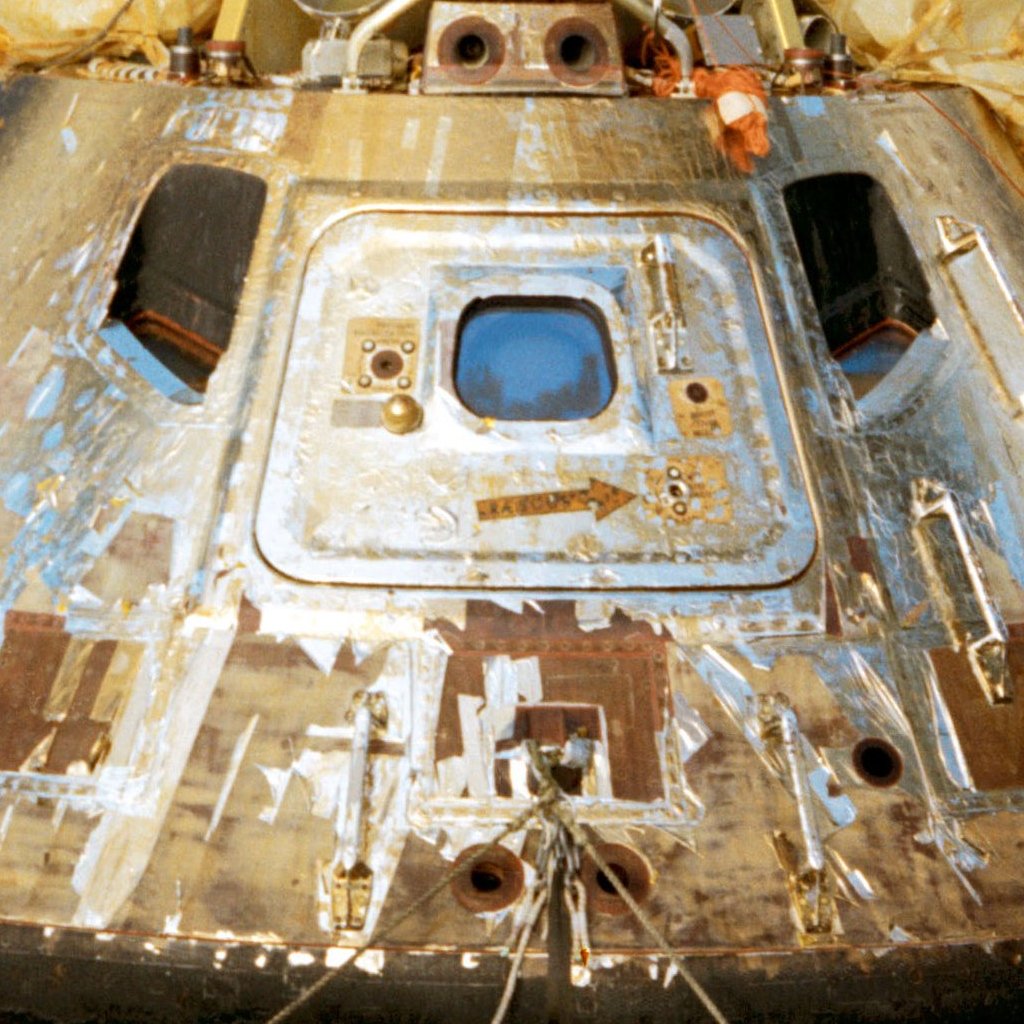
This specimen was recovered at the Johnson Space Center when the Columbia was decommissioned. It comes from the personal collection of retired NASA Production Control Engineer William R. Whipkey, who oversaw the decommissioning process.
The Kapton foil is an aluminized polyimide film used for radiation reflection. The outermost layers of Columbia were installed with the aluminized side facing outwards to provide optimal reflection.
Is It Real?
Yes. 100% authentic.
- Mission-flown material from Apollo 11's Command Module Columbia
- Provenance: NASA engineer William R. Whipkey's personal collection
- Includes certificate of authenticity and display case
- Acrylic cube with magnified lid for easy viewing
Every specimen from Mini Museum comes with a certificate of authenticity and full provenance documentation. Learn more about our authentication.
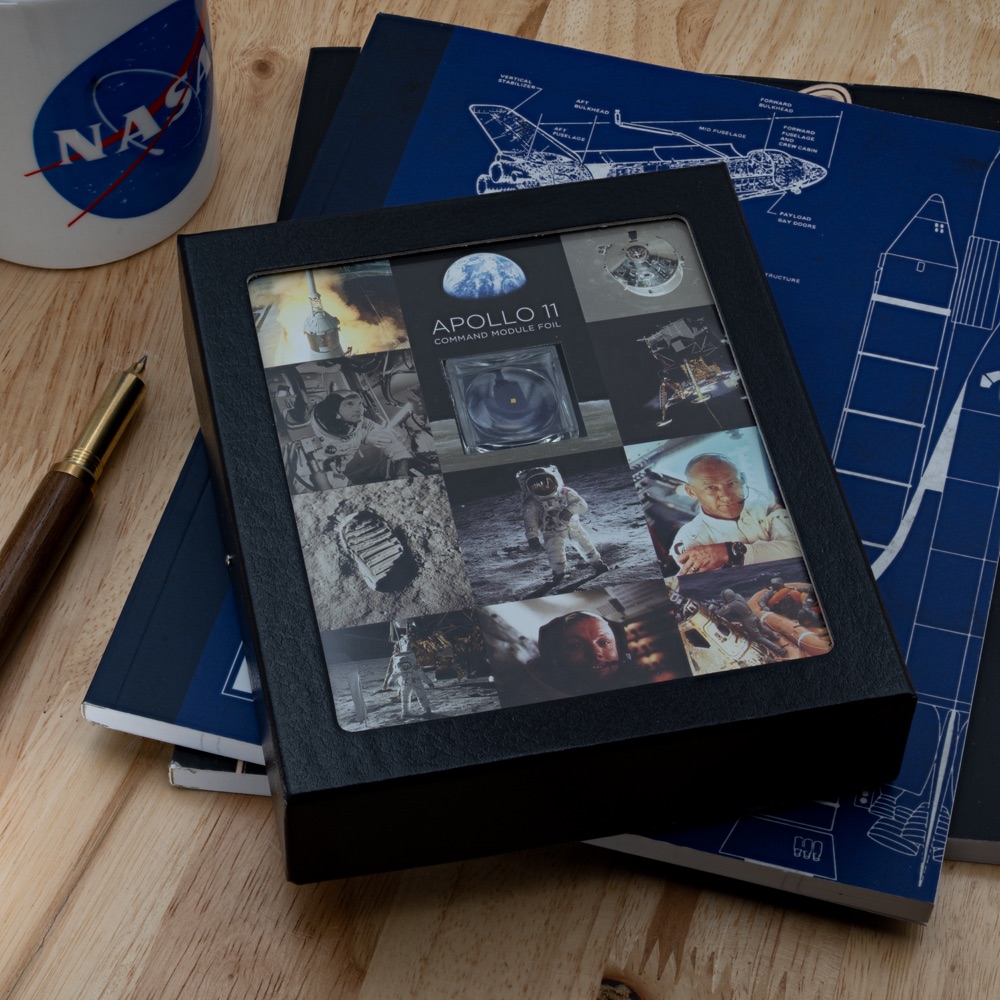
What's Included
The specimen measures approximately 1mm x 1mm and is enclosed in an acrylic cube with a magnified lid for easy viewing. The acrylic cube is housed inside a padded, glass-topped riker box display case measuring 5 1/2" x 6 1/2".
The display includes an information card with a centerline die-cut square matching the dimensions of the acrylic cube. The card has four unique faces, including images from Apollo 11, details about the mission, and a certificate of authenticity. The die-cut design allows you to showcase the specimen inside the display case with any one of four different designs.
An Accessible Piece of History
This display is surprisingly affordable compared to similar items on the market, making it an excellent choice for collectors and space enthusiasts who want to own or share a piece of history at a great price.
Ready to own a piece of history?
Secure checkout powered by Shopify
To the Moon and Back: The Story of Apollo 11
On July 20th, 1969, human beings first walked on the surface of the Moon. Five decades out from that fateful day, this act stands among the greatest accomplishments of our species. Its characters and drama honed to near mythic status as a testament to humankind's potential. What is remembered less often is the story's minutia: the small details and historical footnotes that collectively allowed for the Moon landing to happen at all. As the Apollo 11 crew was quick to remind, the mission's success relied on thousands of scientists, engineers, and technicians who spent years laying the groundwork for the three men who would go to the Moon and back.
The Crew
It was December 23, 1968, and astronauts Neil Armstrong and Buzz Aldrin were acting as backup crew members for Apollo 8, while Michael Collins served as a CapCom, communicating with the capsule. When Apollo 8 became the first mission to approach the Moon, Armstrong was approached by Deke Slayton, Director of Flight Crew Operations, about helming Apollo 11. Armstrong was quick to accept, but to that point it was unclear whether 11 would touch down on the Moon, or if delays to the lunar module would bump the landing to Apollo 12. The answer came on January 6, 1969 when the three formally received their flight assignments.
Training for the Moon
Over the next seven months, NASA prepared to meet their objective of landing on the moon. In March, Apollo 9 saw the first deployment of the complete Apollo craft, while in May, Apollo 10 acted as a dress rehearsal for the final mission. On the ground, the Apollo 11 crew trained for their assignment.
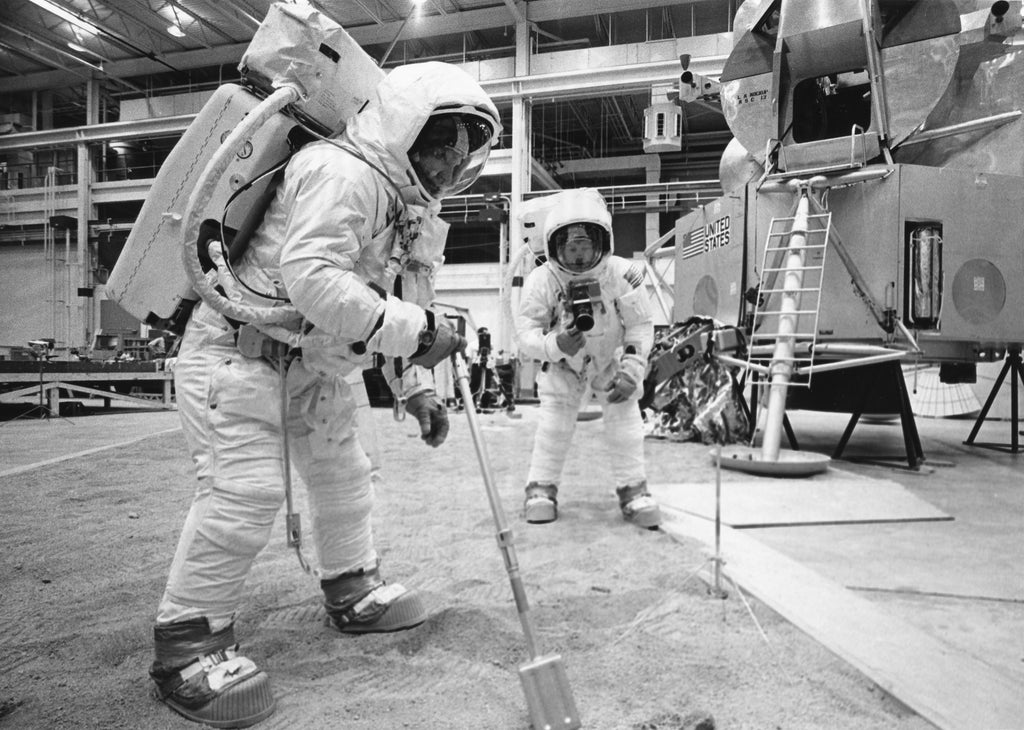
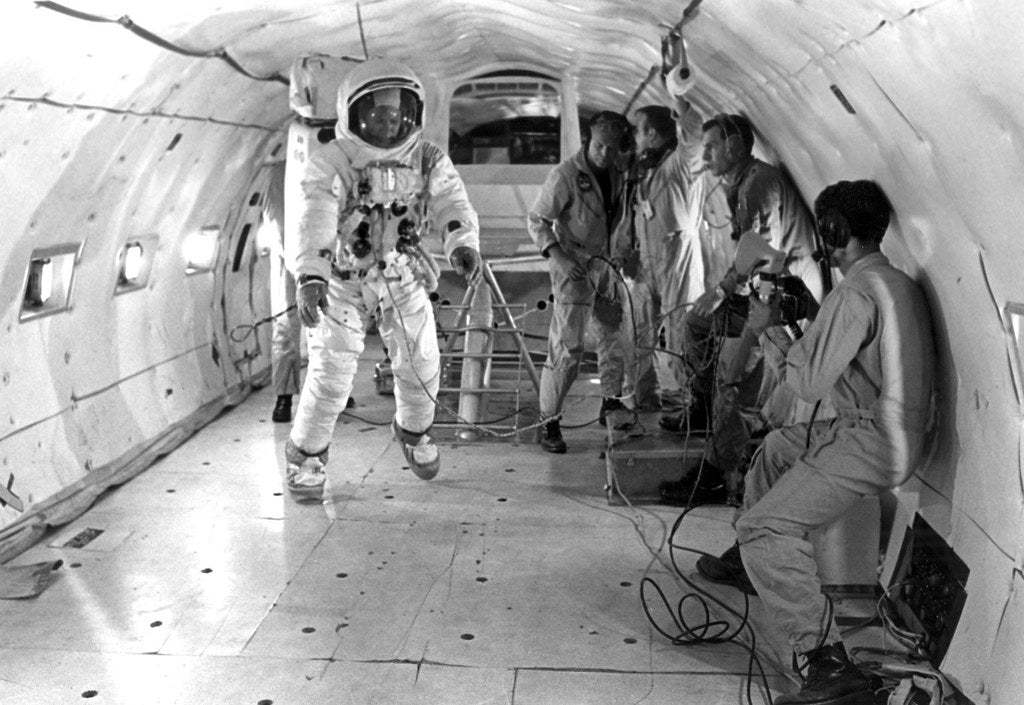
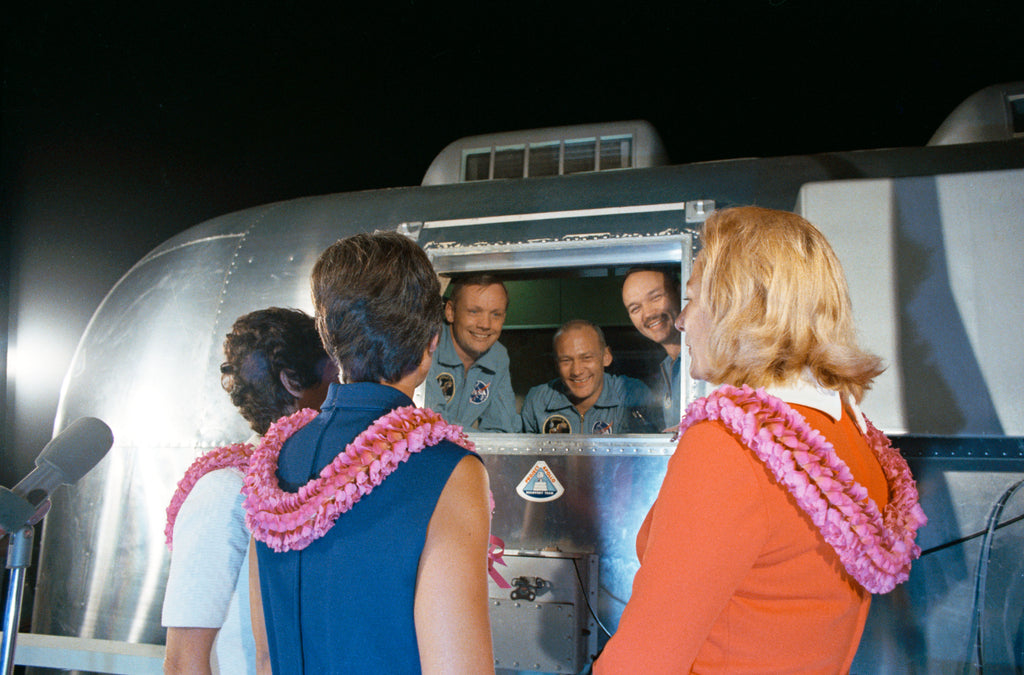
Beyond the hundreds of flight simulations they flew, Armstrong and Aldrin undertook geology training, flew on "vomit comet" flights to simulate 1/6 gravity, and practiced with equipment on mockups of the Moon's surface. A month out from the mission, the three were quarantined to establish a biological baseline to compare against after their return.
The Technology
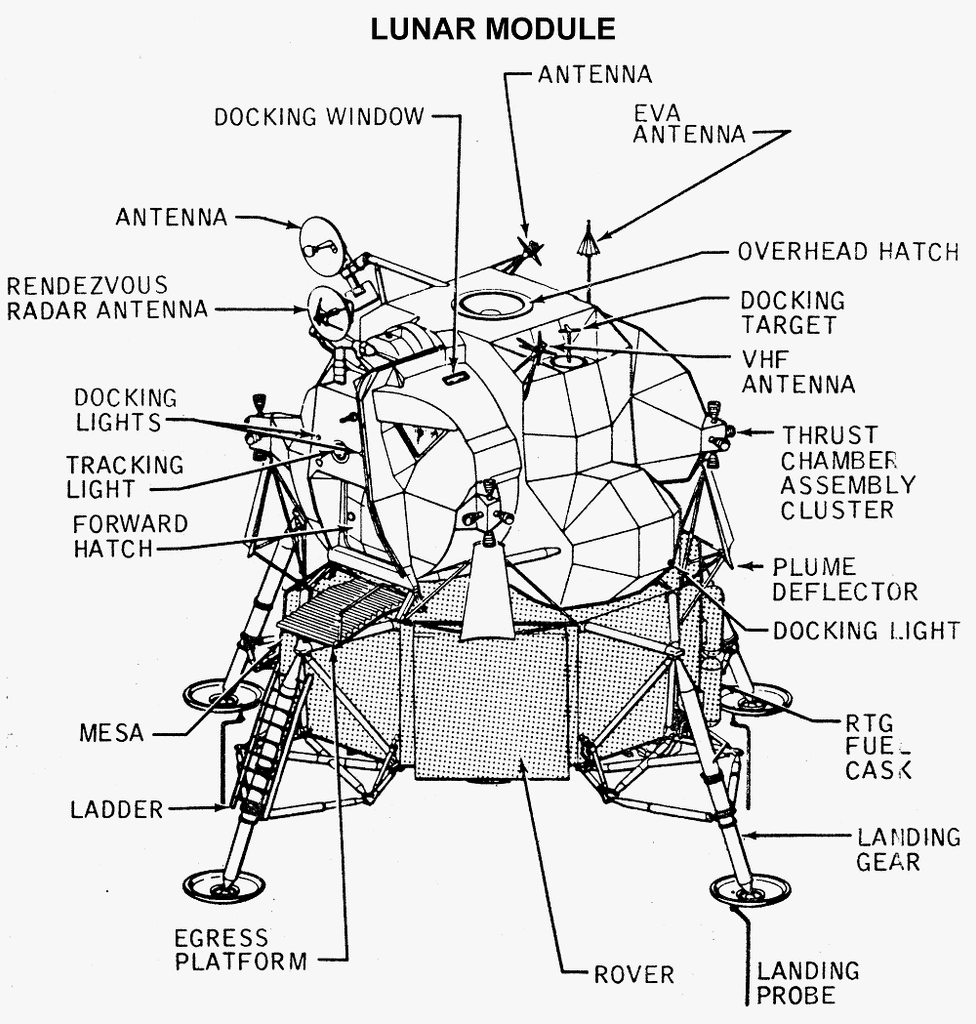
After learning that they would be the first humans on the Moon, the Apollo 11 crew had only a few months for their final training, though the technology they would use had been carefully worked out years in advance.
NASA had hoped to deploy the Apollo Lunar Surface Experiments Package (ALSEP), a suite of machines like a seismometer, gravimeter, radiation detector, and atmosphere reader, but the decision to have just one 2.5 hour excursion made the unit's use impractical. Instead, the simpler Early Apollo Surface Experiments Package (EASEP) was used during Apollo 11, with later missions using the advanced suite.
Who Would Be First?
Before blasting off, there was also the question of whether Armstrong or Aldrin would be the first to step onto the Moon. During the Gemini flights, the mission commanders had stayed in the vehicle while their copilots had conducted spacewalks, suggesting Aldrin would exit first. In part because of simple practical matters, Armstrong was selected instead, as it would be easier for him to leave first based on the lander's door configuration.
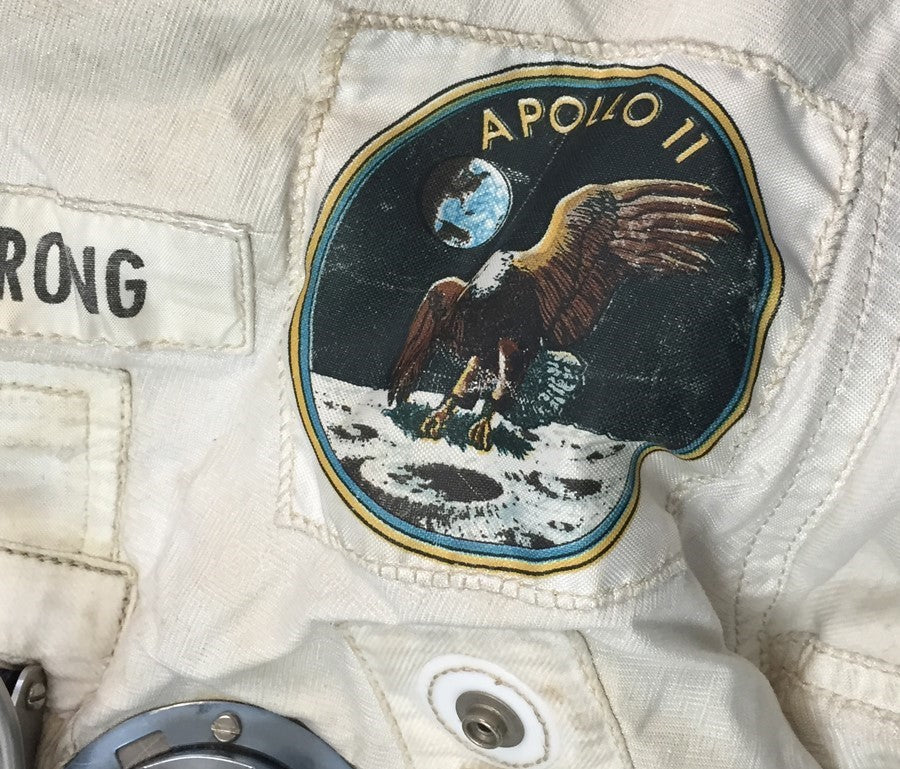
Another non-technical matter to be figured out included the mission's patch, which was to be designed by the crew. Collins himself drew the base design, a bald eagle swooping down to the Moon, clutching an olive branch of peace. Initially, the branch was to be held in the eagle's beak, but it was moved to make the talons appear less intimidating. Collins figured the eagle looked a bit uncomfortable in the new orientation and was quoted as saying he "hoped [the eagle] dropped the olive branch before landing."
Launch Day
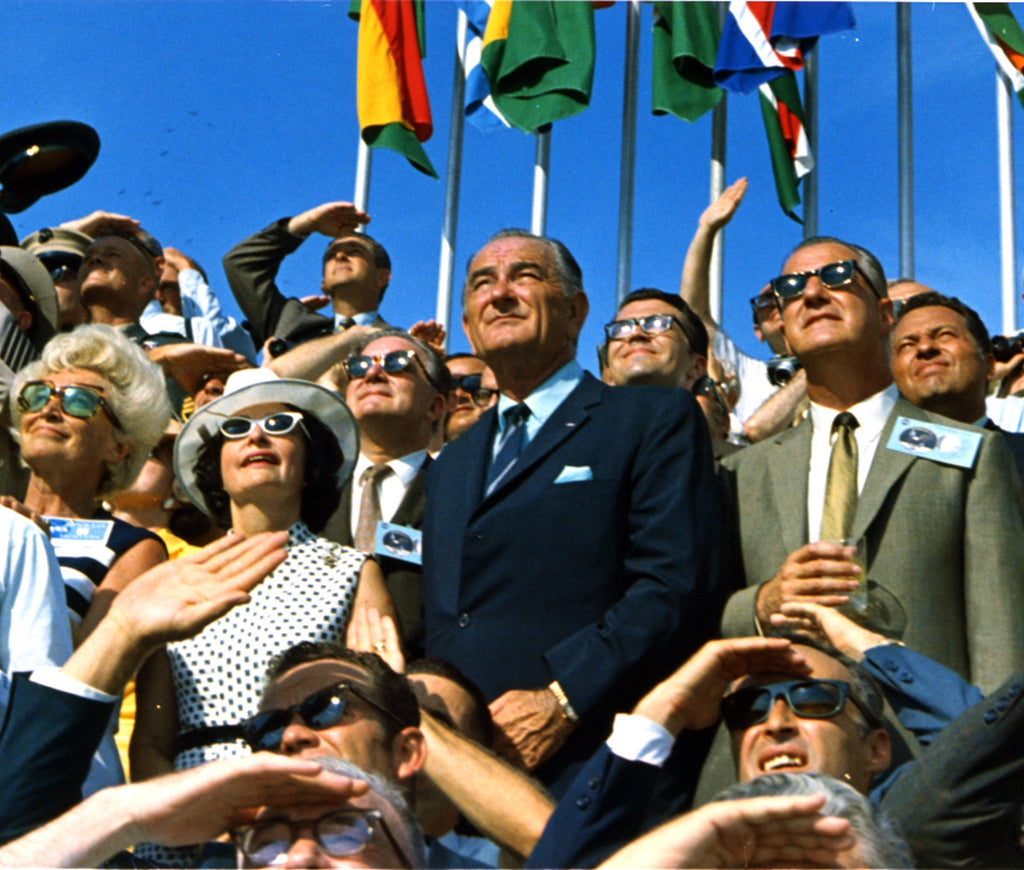
At long last launch day came, July 16, 1969. A million spectators crowded around for miles surrounding Florida's Kennedy Space Center. The Saturn V rocket that held the Command Service Module (CSM) and Lunar Module (LM) stood 363 feet tall, a skyscraper that would carry the Apollo astronauts into space.
The three men were awoken at 4:15 AM and, after a final medical checkup, donned their spacesuits and rode in a van to Launch Pad 39A, where a rickety elevator took them to the top of the Launch Umbilical Tower. In the White Room, the pad's leader gave Armstrong a parting gift: a styrofoam Key to the Moon.
To the Moon
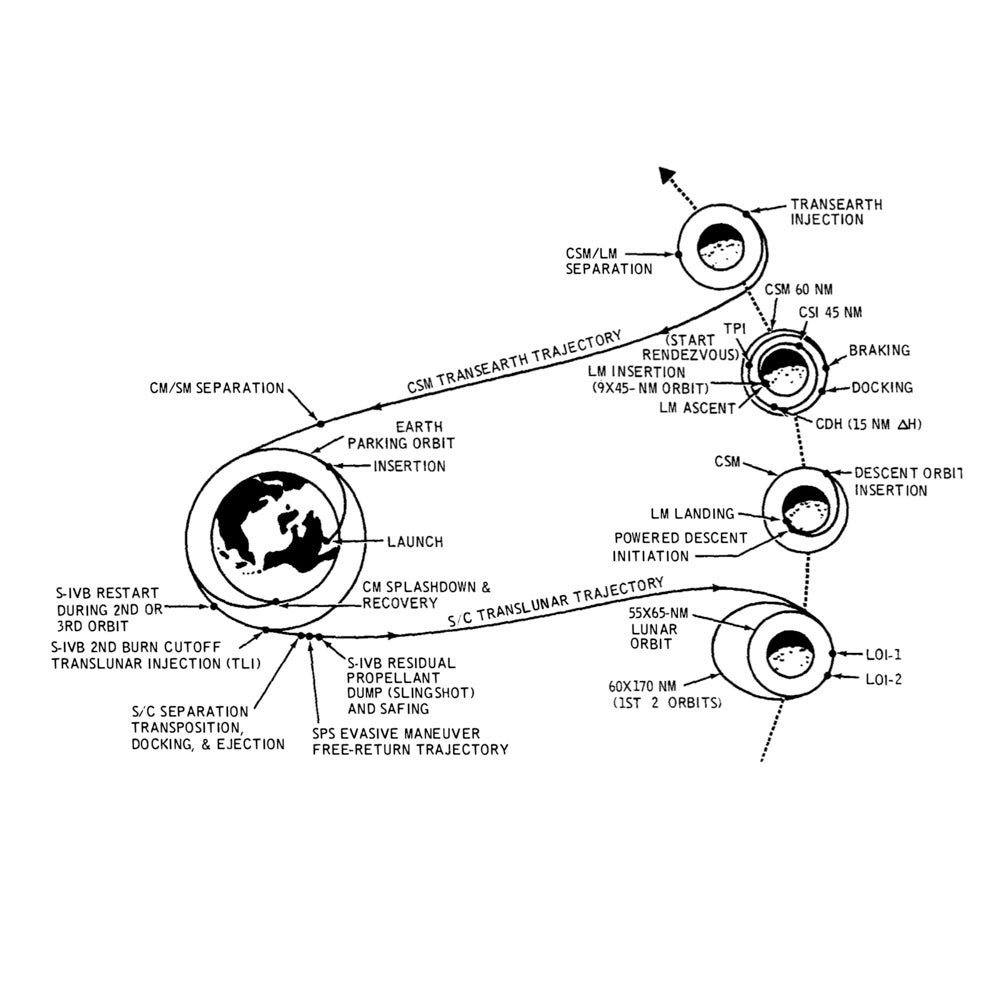
Apollo 11 blasted off at 9:32 AM, watched by millions across live television broadcasts. The rocket shed its large first and second stages, leaving only its third stage to enter parking orbit, where the astronauts revolved once around the Earth before beginning the translunar injection that shot them towards the Moon. En route, Collins performed the delicate maneuver to connect the Command and Service Module to the Lunar Module, by detaching from the larger craft, turning around, and mating the two modules together. From there, the now joined Apollo craft separated from the remains of the Saturn V rocket and began its three day journey to the Moon.
The Eagle Has Landed
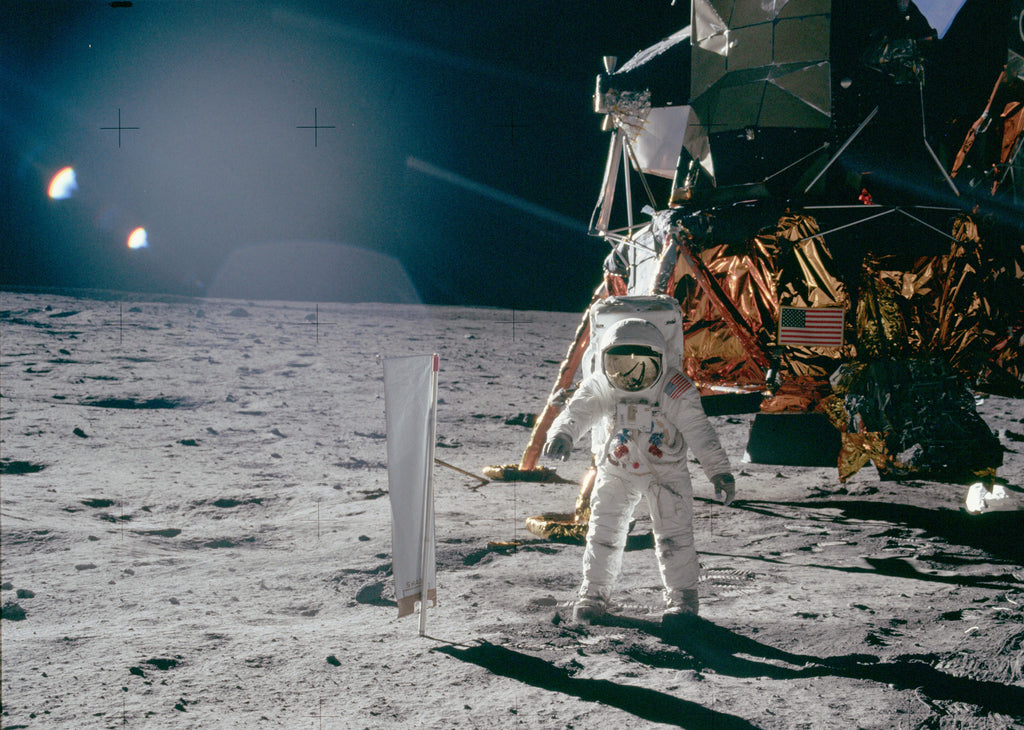
Falling into lunar orbit, Armstrong and Aldrin transferred to the LM, nicknamed "Eagle," while Collins remained aboard the CSM, nicknamed "Columbia." The two modules separated, the LM heading to the surface while the CSM would orbit the Moon. On approach, Armstrong and Aldrin found their intended landing site to be littered with boulders, necessitating Armstrong to manually pilot the module to a new site with just a small sliver of fuel left to spare. The Eagle touched down on the lunar surface at 4:17 PM EST.
On the Surface
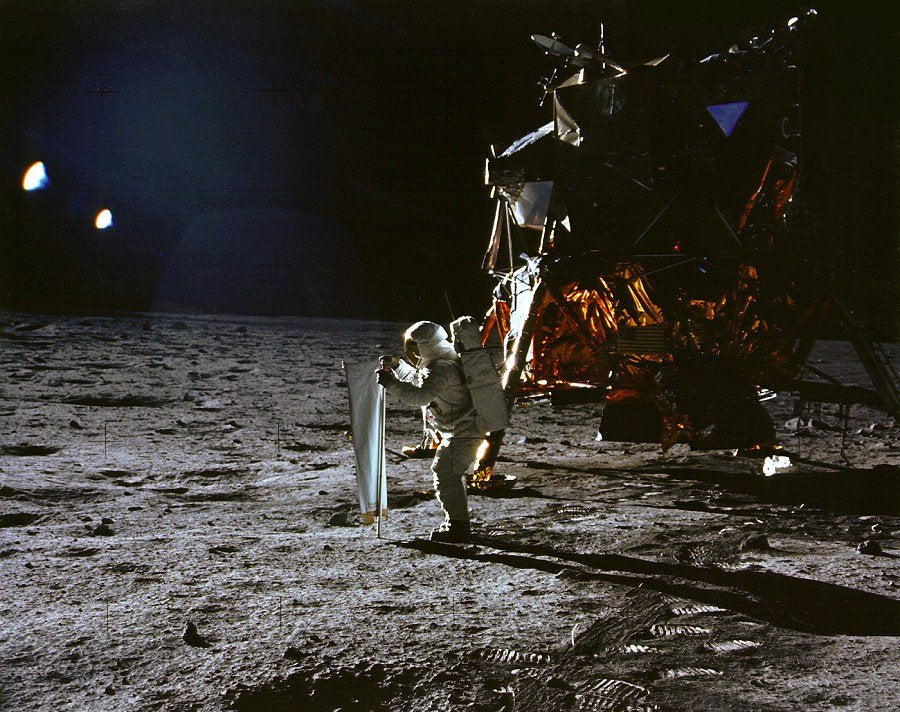
The Moon landing was rife with symbolic moments: planting the American flag, President Nixon's phone call to the astronauts, Armstrong's famous words: "That's one small step for [a] man, one giant leap for mankind." But Apollo 11 was still a scientific endeavor. Much of Armstrong and Aldrin's time on the surface was spent collecting rocks, deploying instruments, and scouting out the lunar surface. When they blasted off from the Moon the next day, they carried with them the first samples and data taken directly from our cosmic neighbor. After an incredible journey, it was time to return home.
The Command Module Foil
As Armstrong and Aldrin traversed the lunar surface, Collins orbited alone in the Command Module (CM). This tiny little cylinder of metal was protected from solar radiation by sheets of kapton foil. Here at Mini Museum, we are proud to offer a genuine specimen of the foil from the CM, a small part of the mission that first landed humans on the Moon.
Acquired at auction, this material comes from the personal collection of retired NASA Production Control Engineer William R. Whipkey. Among space collectors, Whipkey is considered the most reliable source for kapton foil because he oversaw the decommissioning of the Command Modules from multiple missions. He was also responsible for making most of the commemorative displays for astronauts, VIPs, and others who worked on the Apollo Program.
Sources
- Harland, David M. The First Men on the Moon: The Story of Apollo 11. New York; Berlin: Springer, 2007.
- Hurt, Harry. For All Mankind. New York: Atlantic Monthly Press, 1988.

Is it real?
Yes. 100% authentic.
Every specimen from Mini Museum comes with a certificate of authenticity and full provenance documentation.
Own a piece of Apollo 11
Starting at $69.00 · Certificate of authenticity included